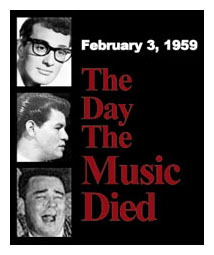
 "The Day the Music Died" project fueled my desire to do more special reports. My team and I began researching a musical group based in Orlando that included two Lexington people. My supervisor shut the project down when I briefed him on it. "Nobody will care," he said. "Not enough interest to justify the time." Having attended one of the group's concerts and talked to concert goers as part of my research, I felt otherwise. I shook my head about a month later, when reading national website traffic reports, I noticed that the two most-visited websites the previous week had been one featuring the group I had wanted to write about - The Backstreet Boys. I couldn't help but thinking ours might have been one of those most-visited sites. Sorry, Brian Littrell, sorry Kevin Richardson, I tried.
My online work at the Herald-Leader gave me new skills - ones that would allow me to act on my desire to report and to tell the stories of people who would likely never be featured on a newspaper's website and to publish those stories. While I had never been told I couldn't operate a "competing" website while serving as the paper's Internet news editor, I knew such a thing would be a conflict of interest. Once again, I deferred my mission. That, however, would soon change.
The paper sent me to a training seminar in Northern Virginia in 1998. I spent the day before and the day after visiting Washington, D.C. Never shy, I talked with people I happened to meet. A couple told me stories about their lives, stories that fascinated me.
I came home and thought about the people I had met. I thought about the stories they had told me. I knew that in a city of a million people (on a weekday) there had to be a lot of interesting stories. I thought that if I found these stories interesting that possibly, others would too.
The desire to write these stories became too intense for me to ignore. I interviewed people and doing research. I interviewed people in Washington via phone calls and during occasional visits there. My reporting satisfied the hunger I had. I knew my project would take a long time to complete and would come with some personal risks, but I decided that helping others would be worth it.
Eventually, it became clear to me that to properly finish my research that I needed to live in Washington for two or three months. I left the Herald-Leader in July 1999 to pursue that mission. It took far longer to work my project than I thought it would, but eventually I had enough material and left Washington. By the way, the stories I wrote were well received.
I returned to Kentucky in 2001 and worked at the Louisville Courier-Journal for two years. I moved back to Lexington in 2005. I am presently an information officer for the Lexington-Fayette Urban County Government, a position I have held for the past 10 years.
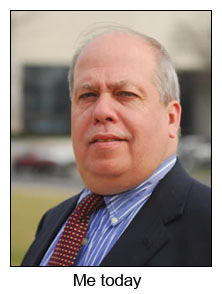 I have written five crime novels. My first, "The Long, Cool Woman in the Black Dress," is available on Amazon.com. The second, "That Summer in the City" will be available later this year, and the others will roll out in 2016. All are based in Washington, D.C. and have strong connections to Lexington, especially my main character, Ryan Crosby. The books contain characters and story lines based on people I met while working my project.
In my fifth novel, Ryan Crosby comes home to Lexington to visit his sick father. The novel, whose working title is "My Old Kentucky Home," offers a series of short stories about Kentuckians. The elder Crosby tells his son that Lexington has a lot of interesting people too and how it is a shame Ryan didn't stay in Lexington and write about them.
A friend of mine, Rita Gatton, has made a routine of sharing posts on Facebook from a website called Humans of New York. The posts show people and give us a glimpse into their lives by sharing something about each of them.
I have adapted that concept and my skills as a photojournalist into WeAreLexington.com.
Those who have previewed the site have liked it. Some have offered to help me with the content, and I hope they do. This is where you can help. If you know of someone worthy of being featured as either a photo profile or a longer text-driven one, please let me know. Maybe that person is you. If so, don't be shy, make your pitch.
If you have taken an interesting photograph here in Fayette County and want to share it, send it to us. For a variety of reasons, we probably won't be able to use everything sent to us or recommended, but I promise you that your material will be seriously considered.
Remember to send IDs and your contact information.
Help me tell the story of Lexington. It truly is a fascinating one.
-- Malcolm Stallons

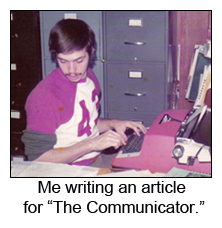 My journey began when, as student body president of Southern Christian College in Winchester, I helped start a student newspaper called "The Communicator." The paper was by no means a pillar of the journalism world but did write about the students attending there. And, in spring of 1974 when a controversial student was expelled, the paper gave that student and others who spoke and acted on his behalf a voice.
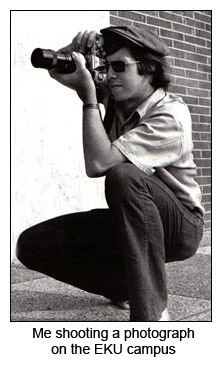 I arrived at the Lexington Herald-Leader in November 1974 with long hair and in bell bottom jeans and - in terms of being a journalist - as green as a long runner bean. I had accepted a freelance assignment during my first semester at Eastern and I went to the newsroom to turn in my article and a couple of photos. Dottie Bean, Margaret Maxwell, and Lu Tayloe took me under their wings and expanded my lessons. I joined the Herald-Leader in 1976 as a full-time employee as part of the Herald's state desk. John Carroll joined the Herald as its editor and restructured the newsroom. I was moved to the newly created universal copy desk (under the leadership of Henry Wright and the late Walter Dorsett) and specialized in laying out the editorial portion of the paper. The Herald and Leader merged on January 3, 1983, and from that day forward put out a single daily edition known as the Herald-Leader. In 1986, I was named design desk editor and supervised a team of designers. I remained in that position until February 1996 when I became the paper's Internet news editor for what is known today as Kentucky.com.


